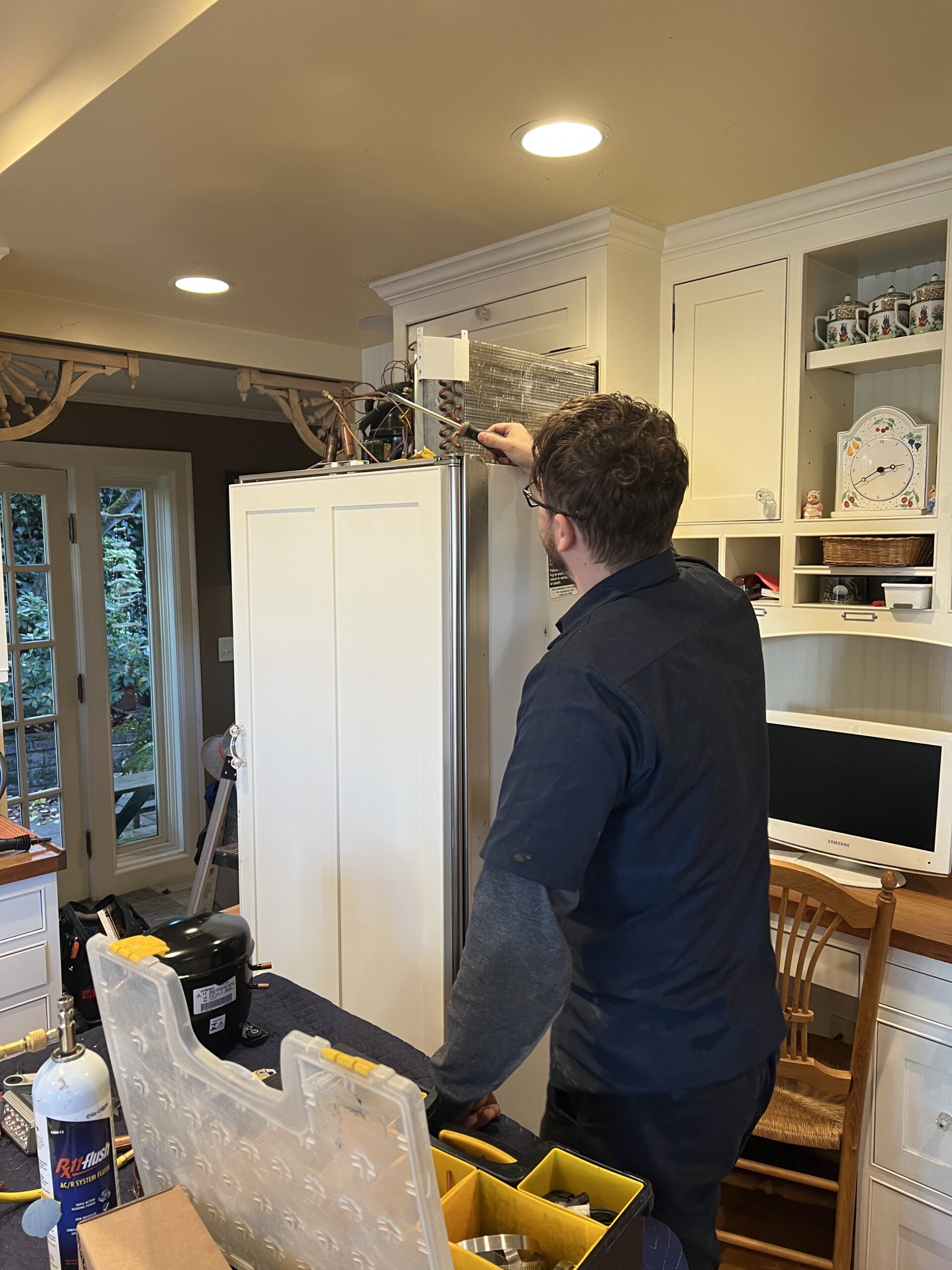
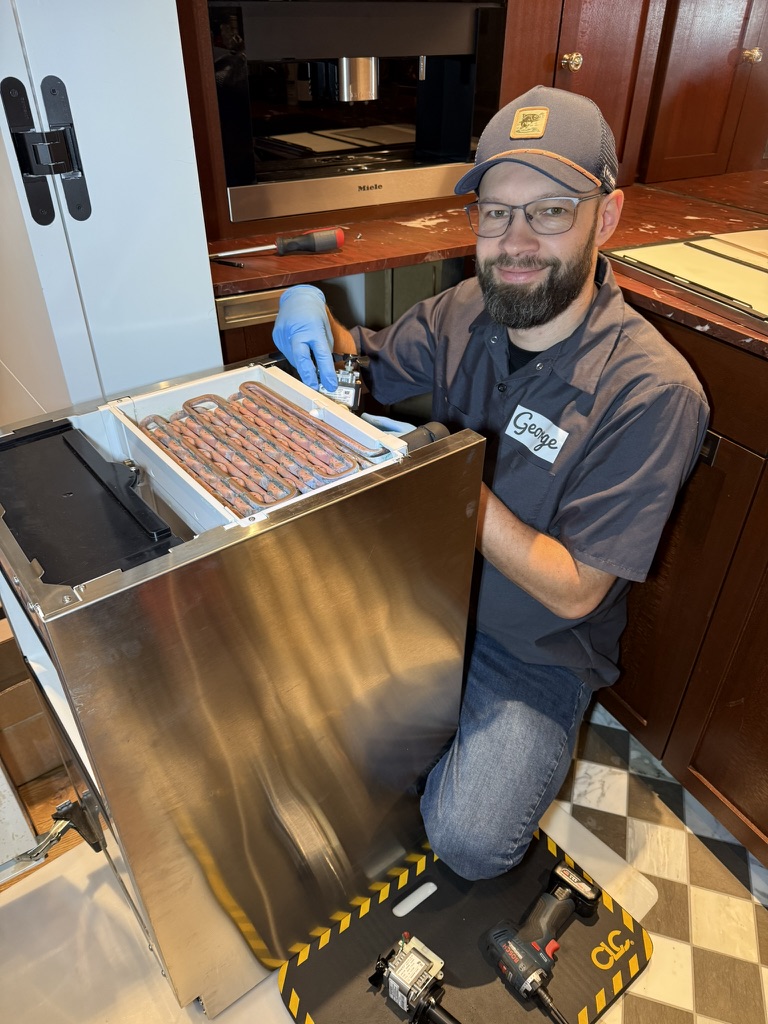
A puddle in front of the dishwasher is easy to spot. Water slowly collecting under a built-in unit is harder to catch, especially when the dishwasher sits flush with the cabinets. Whether you live in a Seattle condo or a Bellevue home, a small leak deserves attention before the next cycle sends more water toward the flooring.
The location and timing of the water provide useful clues. A leak at the front of the door can have a different cause from water under the cabinet or beneath the sink. Here is a practical way to assess the problem without pulling apart an appliance.
First, Stop the Water and Protect the Area
Pause or cancel the cycle. If you see active leaking, shut off the dishwasher’s water supply valve if you can identify and reach it safely. Do not handle a wet plug or exposed wiring. Mop up standing water and move items away from the affected cabinet. If water is reaching an outlet or electrical connection, leave the appliance off and arrange professional help.
Take a few photos before cleaning everything. Record whether the leak appeared during filling, washing, or draining. Note if the puddle is at the door, beside the cabinet, or under the sink. These details can shorten the diagnostic visit.
Avoid running another full cycle simply to see whether the leak returns. A visible puddle is enough reason to stop using the dishwasher until you know the source.
Why Dishwashers Leak From the Front Door
The door seal is dirty, loose, or damaged
The flexible gasket around the door helps keep wash water inside. Food residue can prevent a clean seal, while a torn or flattened section may let water pass. With the appliance off, gently wipe the accessible gasket and inspect it for obvious damage. Do not pull it out unless your model’s instructions tell you to.
A dish or rack blocks the door
A cutting board, tall utensil, or rack that has not slid fully into place can keep the door from closing evenly. Check that nothing presses against the door. If the latch feels loose or the door looks misaligned even when empty, a technician should inspect it.
Too many suds build up inside
Regular dish soap does not belong in an automatic dishwasher. The extra foam can escape past the door. Even dishwasher detergent can create problems when used incorrectly or combined with residue from hand-washed items. Use the product and amount recommended for the appliance and detergent.
If the leak continues with a clean seal, correct loading, and proper detergent, do not assume a new gasket alone will solve it. A spray arm directing water toward the door or an overfilling issue can look similar.
Water Under the Dishwasher or Nearby Cabinet
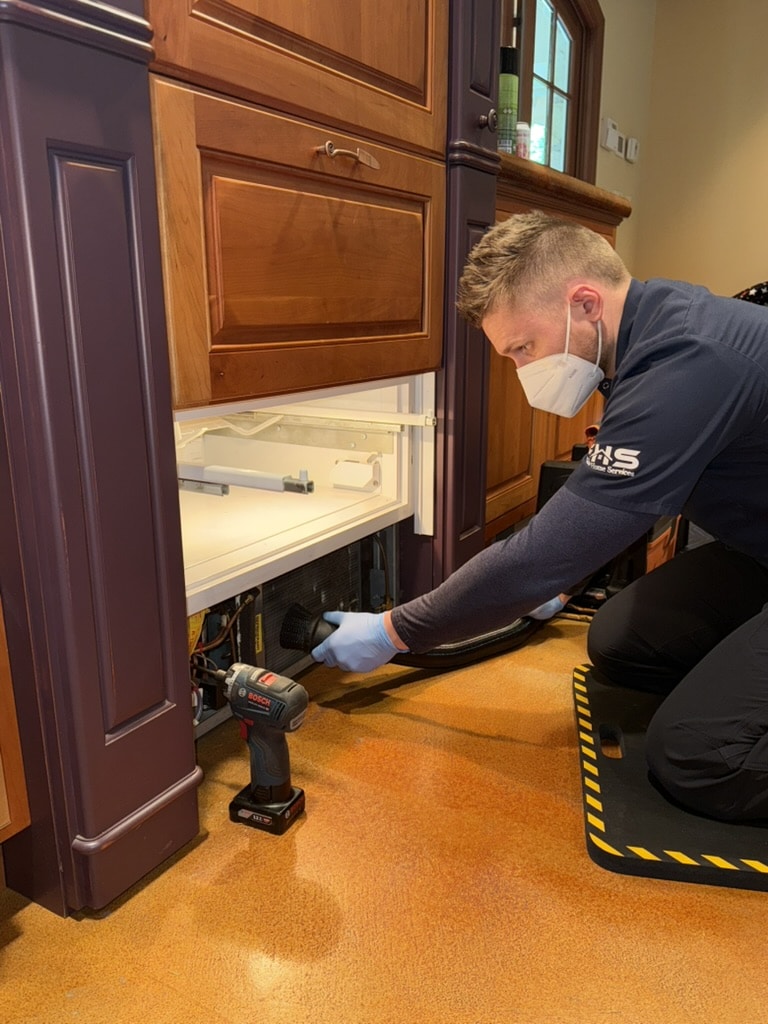
A puddle coming from beneath the machine may involve the inlet connection, internal hose, pump seal, or drain line. Water inside the sink cabinet may come from the dishwasher drain connection or from the sink plumbing itself. Check only what is visible without moving the dishwasher or opening electrical panels.
Look for a damp supply line or drain connection beneath the sink, but remember that water travels. The spot where it appears on the floor may be some distance from the failed component. Built-in and panel-ready dishwashers can hide a slow leak behind cabinetry, so a persistent damp smell or swelling at the cabinet base is worth investigating even if you cannot see a puddle.
Does It Leak During Filling, Washing, or Draining?
During filling: The inlet valve, supply connection, or fill controls may need inspection. An overfilling tub can also send water out of the door.
During washing: Check loading and the accessible door seal. A damaged or obstructed spray arm may send water where it should not go.
During draining: The drain hose, pump area, or sink/disposal connection becomes more relevant. If the sink backs up at the same time, a household drainage issue may be involved.
These are clues, not a way to identify a failed part from the kitchen floor. A technician can run controlled tests and inspect the area under the appliance.
When a Dishwasher Leak Needs Professional Repair
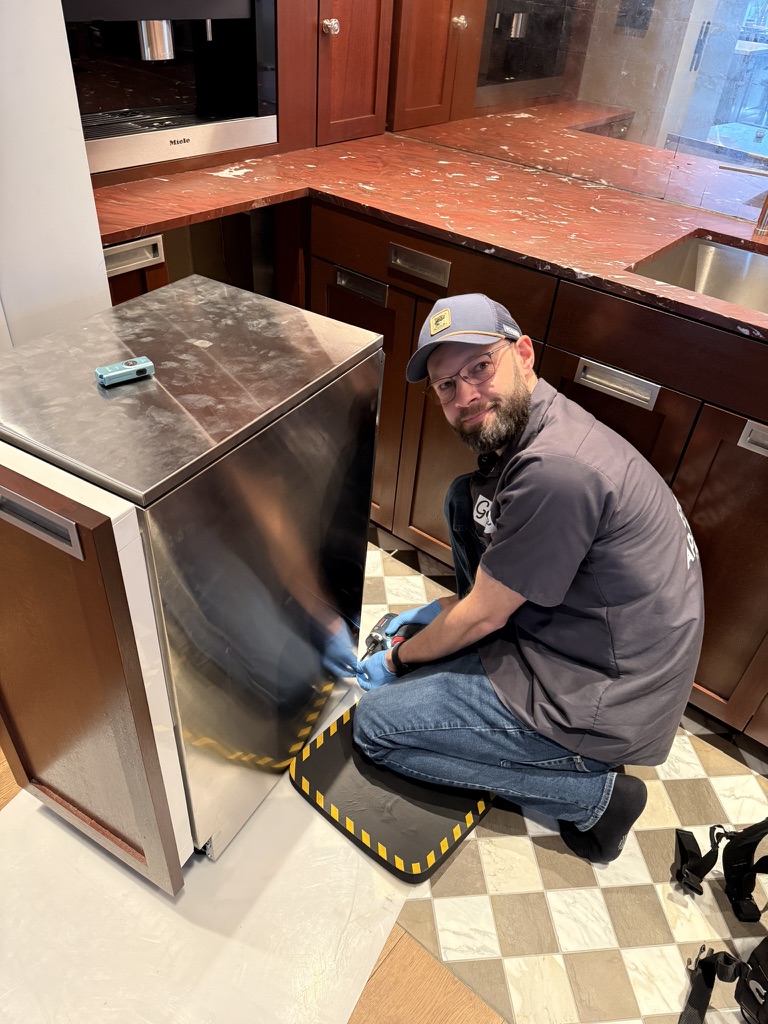
Arrange service if the leak repeats, you see moisture under the cabinet, the door does not close evenly, or an error or leak warning appears. Stop using the dishwasher immediately if water is near electrical parts. A technician can locate the source, explain the repair, and help you decide whether fixing the unit makes sense.
Give the company the dishwasher’s model number, whether it is built-in or panel-ready, and where you first noticed the water. If you live in a multi-unit building, follow any building rules for reporting water that may affect neighboring units. Quick action can prevent a manageable appliance repair from becoming a larger flooring or cabinet problem.
Keep an Eye Out After the Repair
Check the floor and nearby cabinet during the first few cycles. Load dishes so the racks close fully, keep the seal clean, and use only detergent made for dishwashers. If the machine has a user-removable filter, clean it as the manual recommends. Do not ignore a new smell of damp wood or a cabinet edge that begins to swell.
Leaks are not all caused by poor maintenance. Hoses, pumps, seals, and valves wear over time. The useful habit is noticing water early and getting the actual source identified.
Get the Leak Checked
Water under the dishwasher can be hard to trace from the outside. EHS Expert Appliance Repair handles dishwasher repair in Seattle, including built-in units, and serves Bellevue, Mercer Island, Kirkland, and nearby King County communities. Contact the team or call (206) 466-3323 to describe when and where the leak appears.
Have an appliance issue today?
Our licensed technicians offer same-day service across Seattle and King County.