
One Part, Usually
Magnetrons, diodes, door switches and fuses are individual components. A repair replaces the failed part, not the appliance.
Microwave runs but won't heat, sparking inside the cavity, or a turntable that's stopped turning? We repair countertop, over-the-range, and built-in microwave units across Greater Seattle — same-day where the schedule allows, with a written estimate before any work starts.
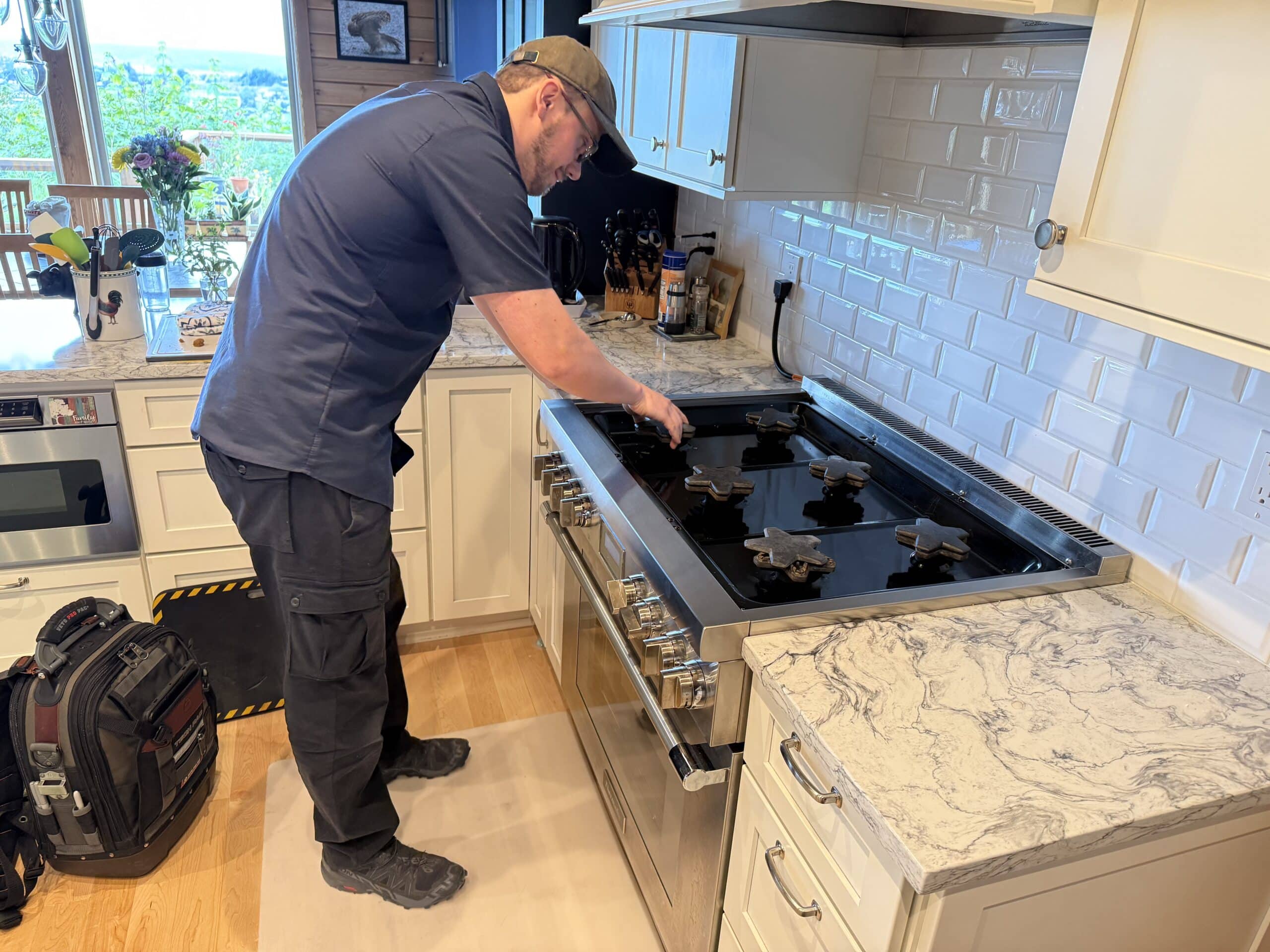
A microwave is a high-voltage appliance wrapped around a magnetron, door switches, and a control board. When any one of them fails, the symptoms are easy to spot — the cause usually isn't. Here's what we get called for.
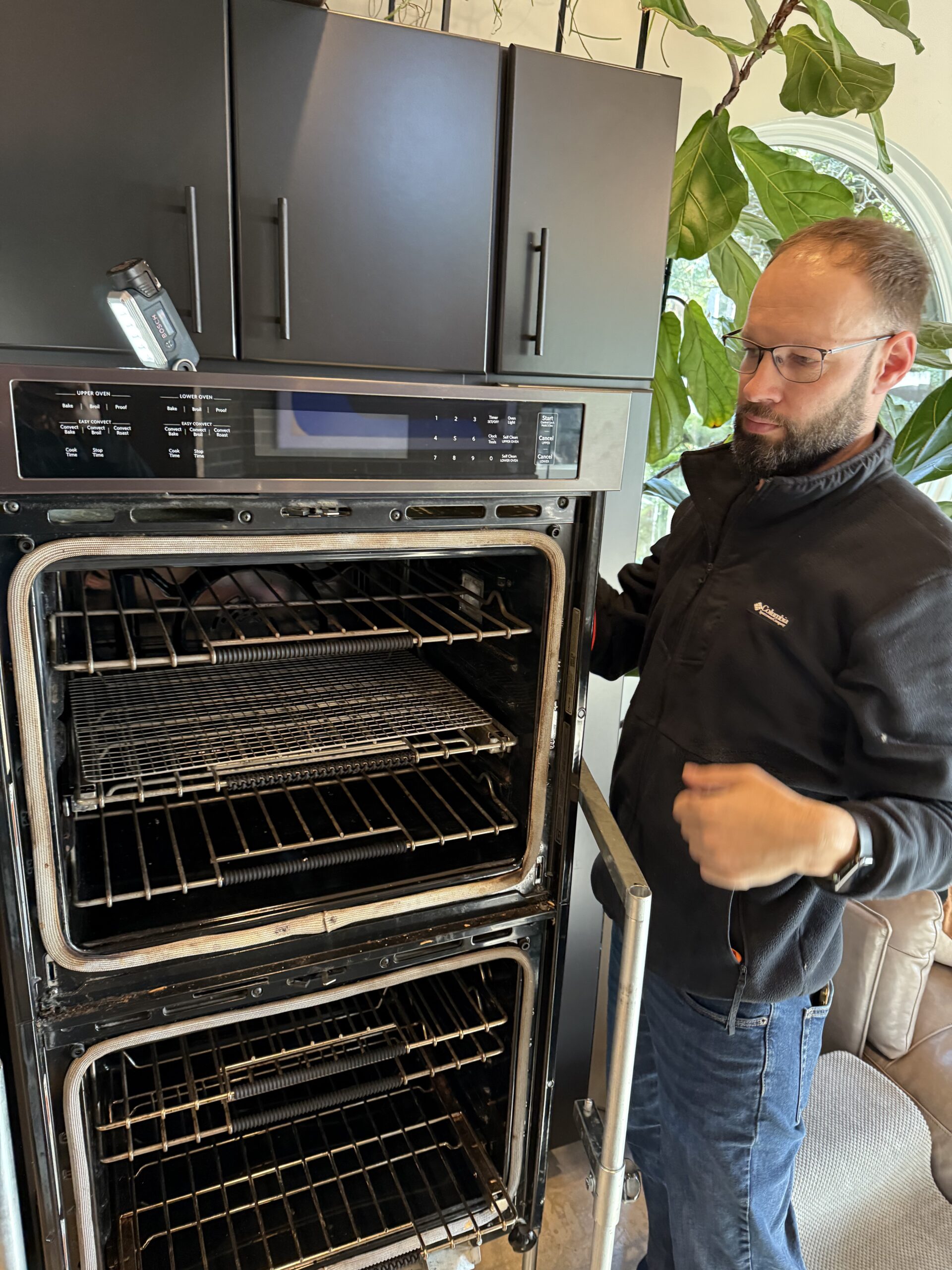
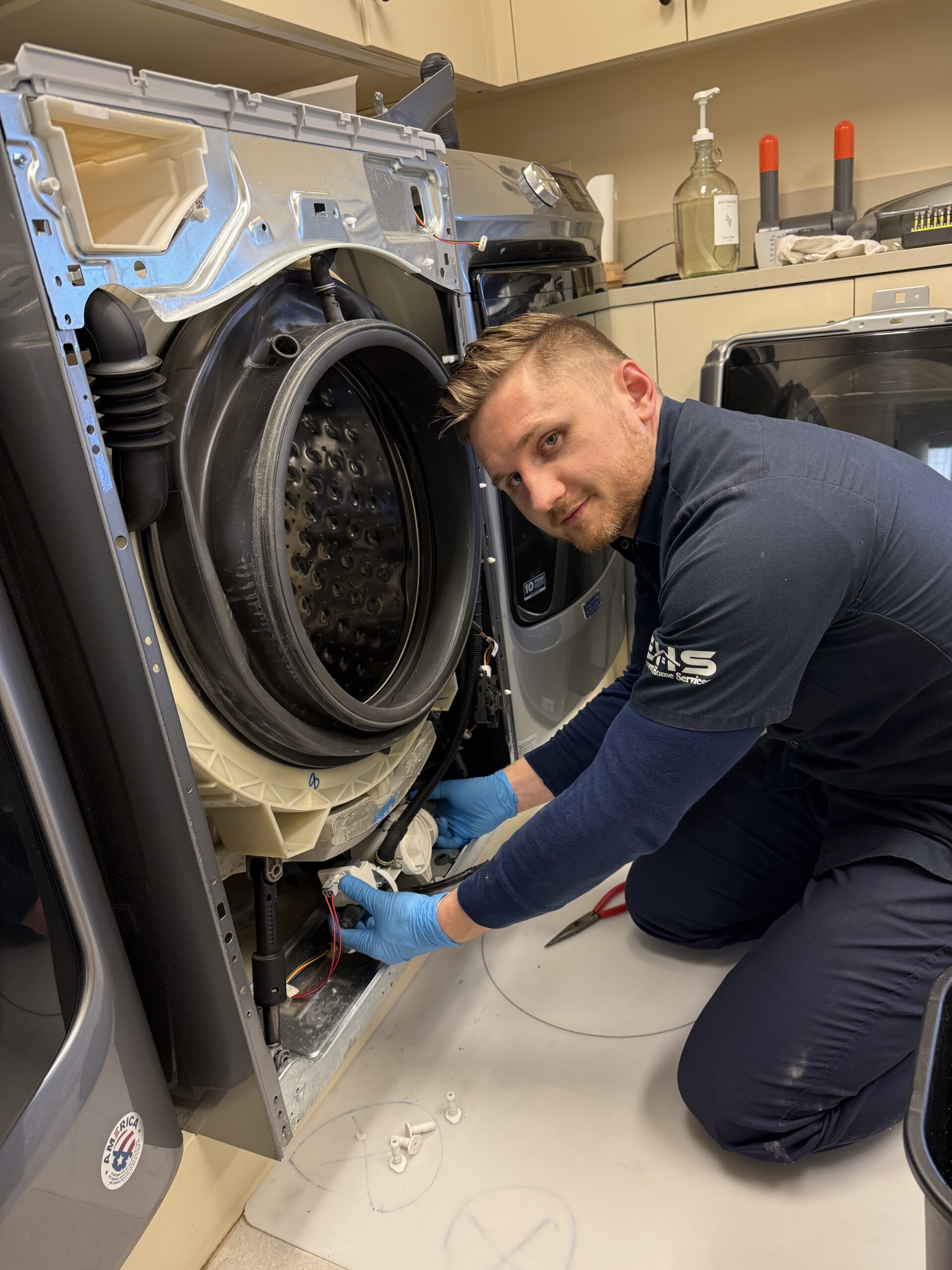
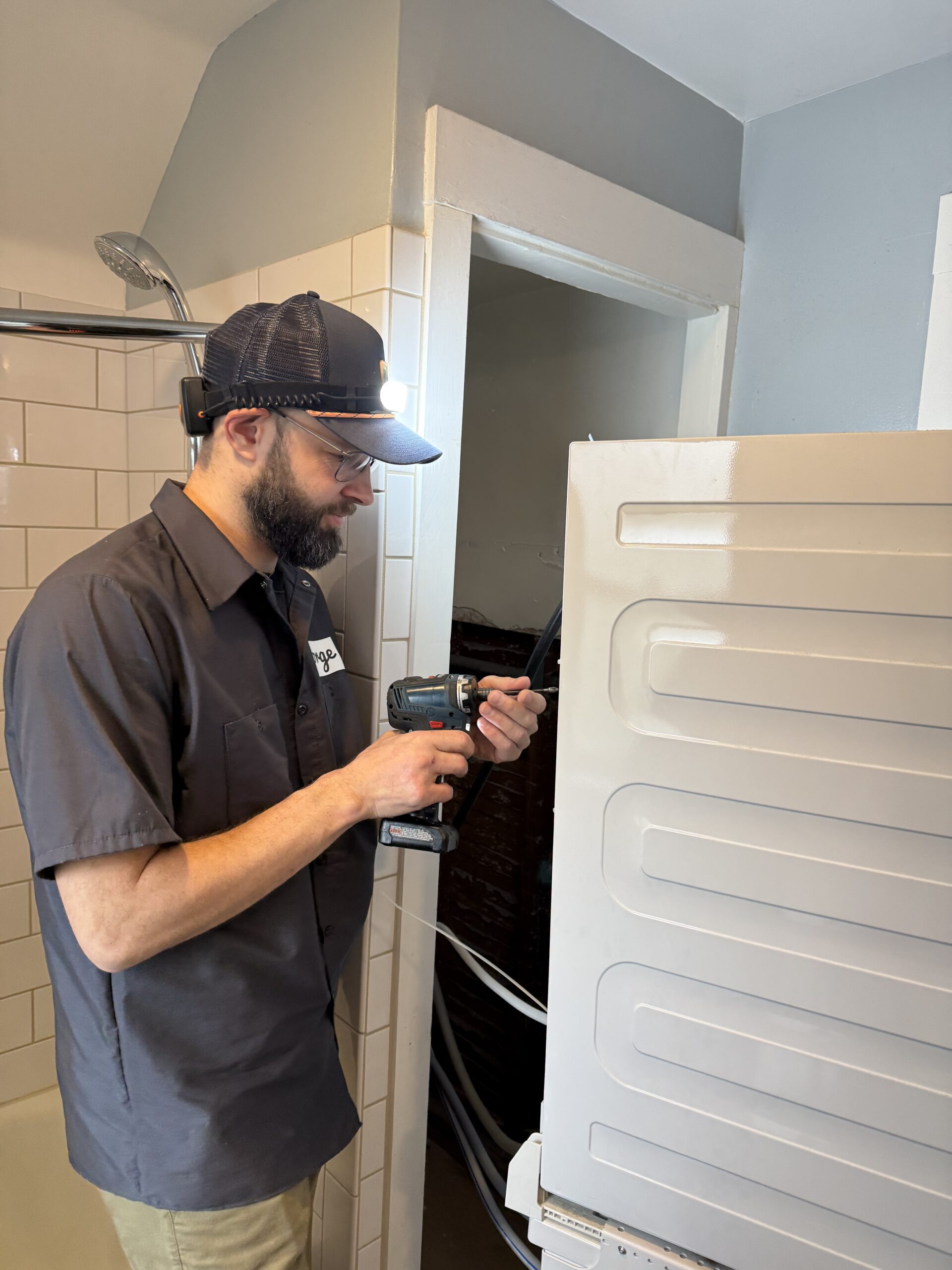
Issue 01 of 08
Runs But Won't Heat
Spotted your issue?
The most common microwave repair call. The light works, the timer counts down, but the food comes out cold. That points at the high-voltage side of the appliance:
Sparks mean electricity is arcing somewhere it shouldn't. Stop using the unit immediately — arcing can damage the magnetron and scorch the cavity. Common causes:
Food that heats unevenly in the same spots is often a stopped turntable rather than a heating problem. Usually it's the drive motor, a worn roller guide, or the coupler between the motor and tray.
A completely dead microwave is often just a blown thermal fuse or a failed door switch, both testable. On built-in and over-the-range units, the problem can also be the dedicated circuit or the wall plug behind the cabinet.
Buttons that do nothing, random settings, or a display flickering usually trace to a worn membrane keypad or a failing control board. Some units accept a replacement keypad; others need the whole board.
A door that won't close firmly, or a unit that stops mid-cycle when the door shifts, points to bent latch hooks, a broken door spring, or worn door interlock switches — the safety parts that keep the magnetron from firing with the door open.
A hum that's louder than usual, a buzz when heating starts, or a grinding turntable all point at failing components — a strained transformer, a diode on its way out, or a turntable motor under load. Caught early, these are affordable fixes.
On over-the-range microwaves, the vent fan, cooktop light, and charcoal filter are part of the same unit. Dead lights, a fan stuck on one speed, or weak venting usually come down to the fan motor, light sockets, or a grease-clogged filter.
A microwave failure is usually one testable component — and on built-in and over-the-range units, a repair avoids the far bigger job of replacing the whole installation.
Magnetrons, diodes, door switches and fuses are individual components. A repair replaces the failed part, not the appliance.
Over-the-range and built-in microwave replacements often involve cabinetry work and trim kits. Repairing skips all of that.
Microwaves hold lethal high voltage inside. Arcing, sparking, and door faults are not DIY territory — they need a proper diagnosis.
A few no-heat and no-power calls have simple answers. Check these first — then stop; the inside of a microwave is no place to experiment.
Safety first
Never run a microwave empty, with the door open, or with anything metal inside. Unplug the unit before inspecting it — internal capacitors hold a dangerous charge even when unplugged.
Confirm the outlet works by plugging in something else. On built-in units, check the dedicated circuit breaker too.
A door that isn't fully latched stops heating as a safety measure. Clean the latch area if grease is keeping it from seating.
A tray sitting slightly off its roller guide won't spin. Lift the tray out and set it back squarely on the guide ring.
Grease or food debris on the waveguide cover can cause arcing. Clean it gently — never scrub or remove the cover itself.
We start with the symptoms and work through the safety chain: door switches, thermal fuses, and the interlock system first, because they cause most heating and cut-out complaints. If the high-voltage side is at fault, we test the magnetron, transformer, diode, and capacitor properly — these parts hold a dangerous charge, and guessing at them is how people get hurt.
We service countertop, over-the-range, and built-in microwave units on every major brand, including the trim-kit and cabinet-mounted installations that are tedious to remove and reinstall. Common parts ride on the van, so most visits finish in one trip.
You get a written estimate before any work begins, and the repair is backed by our parts and labor warranty.
Countertop, over-the-range, or built-in — one team, one call, one warrantied repair.
Experienced with high-voltage diagnostics on magnetrons, transformers, and interlock systems.
Online requests accepted 24/7. Business-hour calls handled the same day where possible.
Every repair backed in writing.
Countertop, over-the-range, built-in, trim-kit, and convection-microwave units.
Clear written quotes before any work — no surprises.
Repair plus vent fan, filter, and light servicing on over-the-range units in one visit.
Our technicians work on built-in and professional-grade appliances every week across Seattle, Bellevue, Medina, Clyde Hill and Mercer Island.
Microwave Repair is available across Greater Seattle & the Eastside.
Our diagnostic service call is $139 + tax. That covers coming out to your home and finding exactly what's wrong — then you get a written estimate for the repair before any work begins, so there are no surprises.
When a microwave runs normally but comes out cold, the high-voltage side has failed — usually the magnetron, the high-voltage diode, a door switch, or the transformer. A proper microwave repair visit tests each one and replaces the failed part rather than the whole unit.
Sparking or arcing in a microwave usually means a damaged waveguide cover, chipped cavity paint exposing bare metal, or something metal left inside the cavity. Stop using the unit immediately — continued arcing can destroy the magnetron — and have it inspected before the next use.
It depends on the part. Door switches, fuses, turntable motors, and diodes are inexpensive repairs on an otherwise healthy unit. A failed magnetron on a basic countertop model can approach the cost of replacement, while the same repair on a built-in or over-the-range installation is usually well worth it. We diagnose first and give you a written estimate so you can decide.
Yes. We repair over-the-range microwaves including their vent fans, cooktop lights, and filters, plus built-in and trim-kit microwave installations across Seattle, the Eastside and South King County.
A microwave that stops partway through usually has a tripping thermal cutout — often from a blocked vent or a failing cooling fan — or an intermittent door interlock switch. Both are safety components, and both are testable during a repair visit.
Pricing depends on the part and the type of unit, so we diagnose the microwave first and give you a written estimate before starting any work.
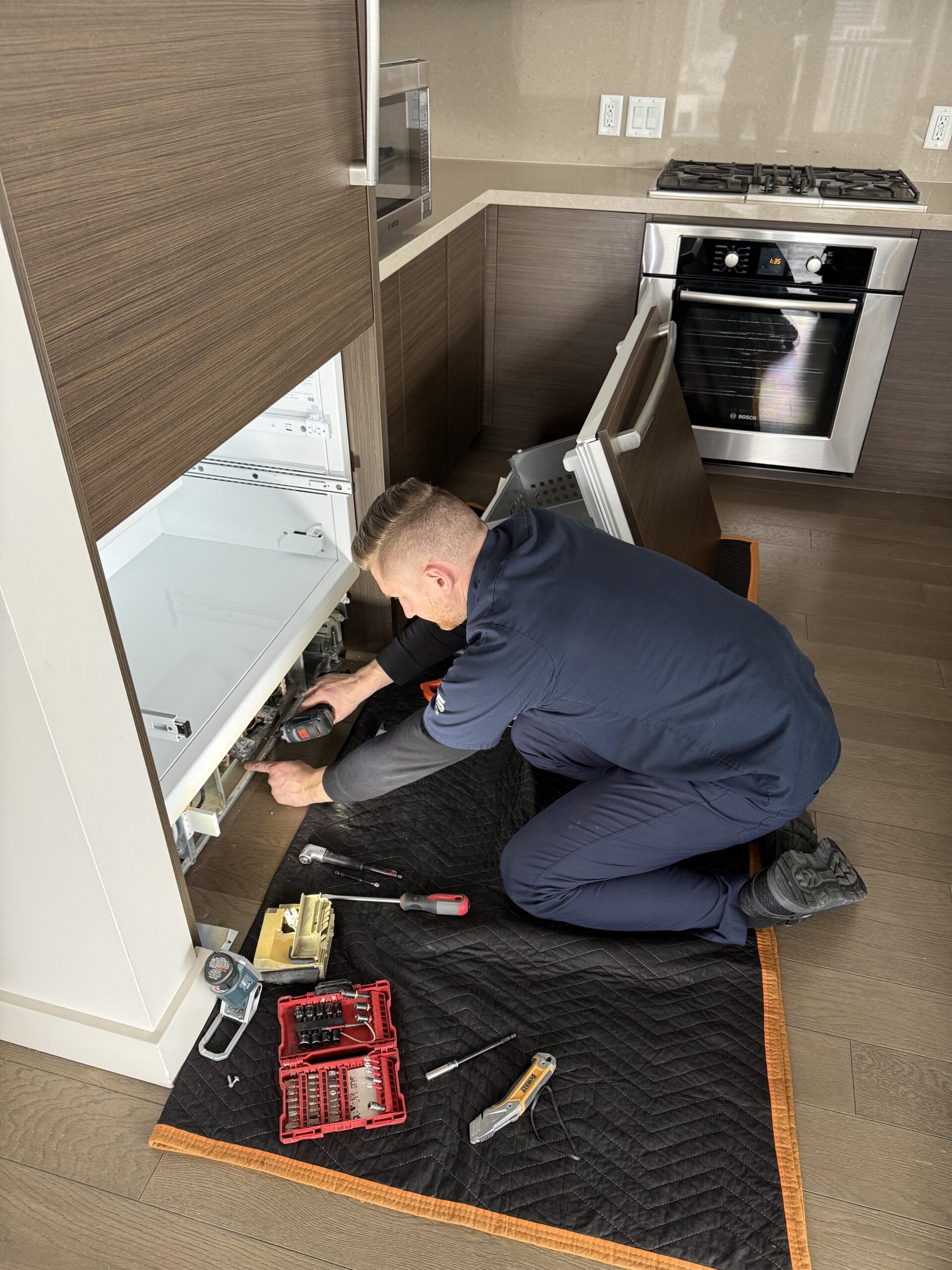
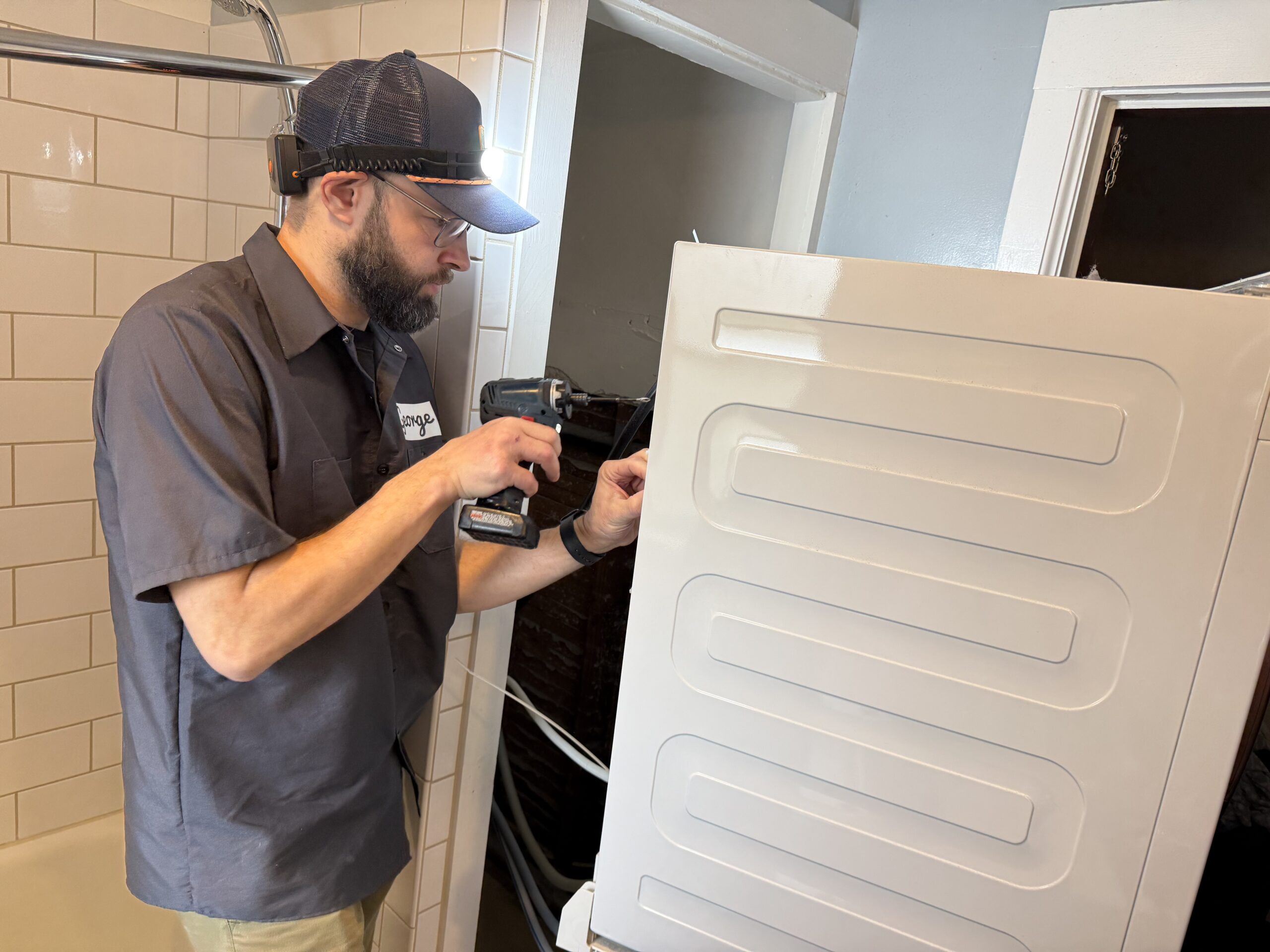
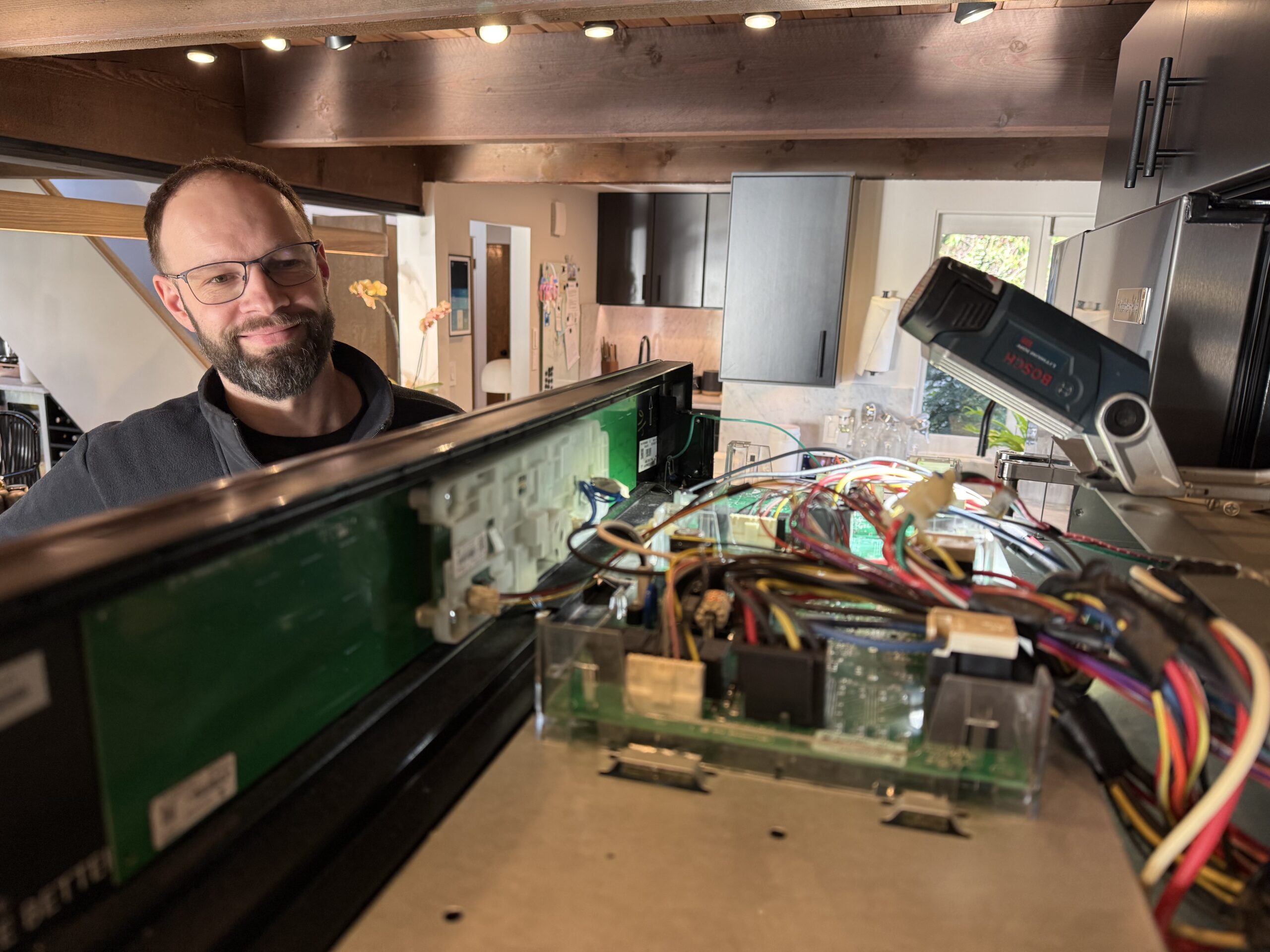
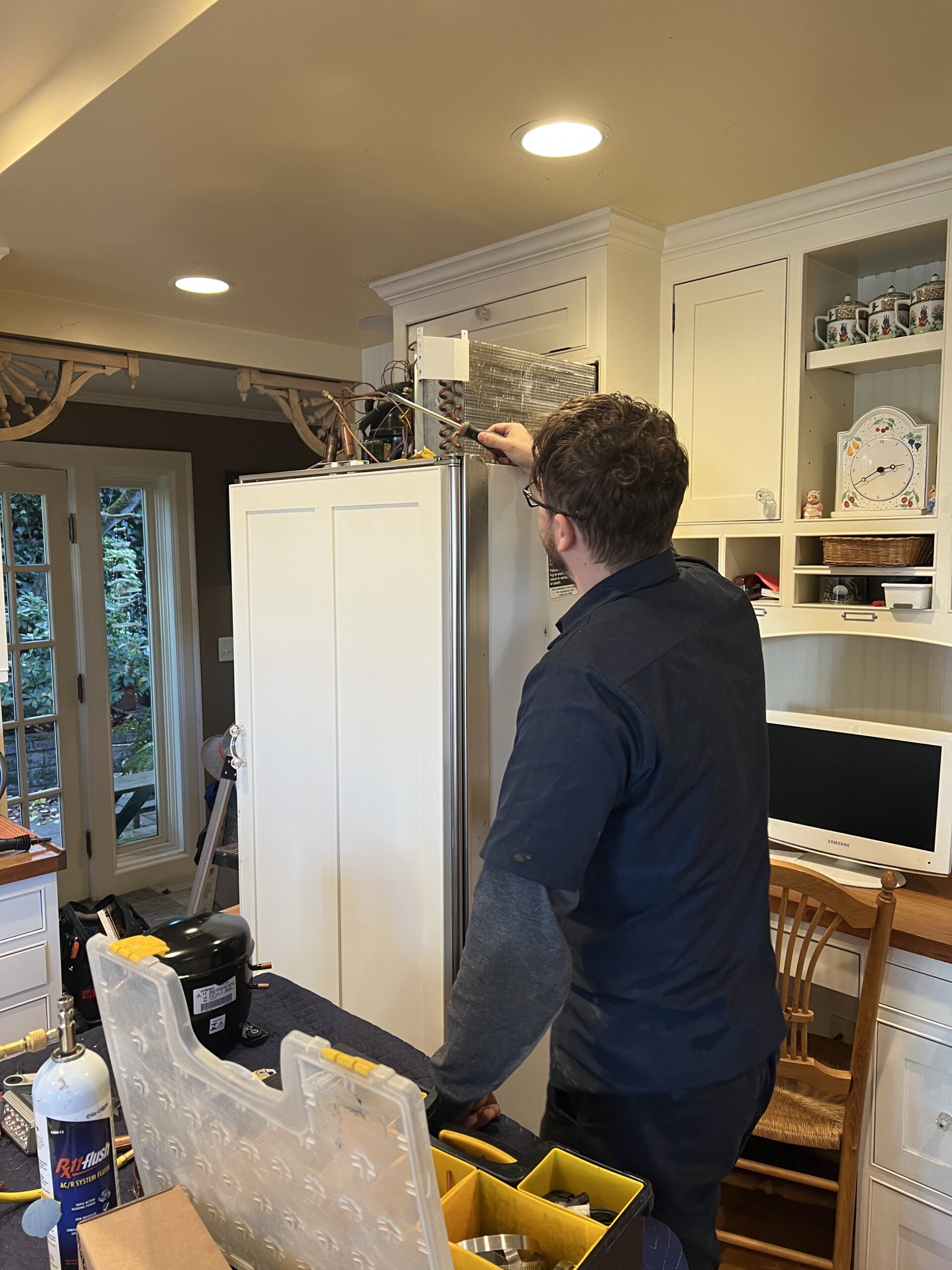
A few of the smiles we've earned on the job — and what our customers had to say afterwards.
Refrigerator Repair
Bellevue, WA
Washer Service
Seattle, WA
Freezer Fix
Redmond, WA
Refrigerator Repair
Bellevue, WA
Washer Service
Seattle, WA
Freezer Fix
Redmond, WA
Rebecca Maruhashi
12 months ago
Thomas is a very friendly and knowledgeable technician. He communicated with us well and scheduling was very timely. He fixed our double ovens for us and repaired an exhaust problem with our range. We highly recommend Thomas to anyone needing appliance repair! 5 stars!
Cathie Huffman
12 months ago
Service was scheduled quickly, repairman called with expected arrival time and arrived promptly. Repairs needed were identified and carried out, kitchen was left clean and the refrigerator works! He called the next day to be sure everything was working well. This was an excellent experience throughout.
Jennifer Steinke
12 months ago
Dmitro was amazing! He showed promptly when he said he would, explained all my options thoroughly when it came to addressing the obnoxious noises my fridge was making, and had an impressive eye for detail (he managed to empty and then re-place everything in my fridge almost exactly where he had found it! Impressive!) he was kind and easy to work worth.
Alicia Pedneault
12 months ago
Vlad was very helpful, timely, and communicative. He was able to quickly conduct diagnostics, ordered the necessary part, and my washing machine was back up and running within a few days. Thanks Vlad!
Marina Spicer
13 months ago
Great costumer service was able to set up an appointment for a technician to come look at a problem with refrigerator on a next day! Dmitro, the technician, was able to determine an issue with the ice maker in our Bosh 800 series refrigerator. He recommended to replace parts. Ordered them right away and installed on a next visit. It is working perfectly since, making ice again. Thanks! I highly recommend this company to anyone who is looking for a fast, professional solutions.
Monte Mineard
13 months ago
We got excellent service from Demitro. He is very knowledgeable and repaired the service to our dishwasher in one visit. I have their number on speed dial and will be recommending their services to friends and family. M
Louise Hones
1 year ago
I was so impressed with Expert Appliance Repair and especially Dmitro. I have used this company before for some refrigerator maintenance and they were awesome then as well. I think what impresses me most is how quickly they respond. Dmitro was professional, polite and personable. He looked at the problem I was having and ordered the parts to be overnighted. He came back the following day, installed the parts efficiently checking to make sure the parts were in correctly and working properly. The parts and repair were very reasonable. I will always use this company for appliance repair and will share their number with my neighbors and friends.
Richard Xia
1 year ago
We had an excellent experience with Leo who repaired our Sub-Zero refrigerator. The service was fast, professional, and efficient. He responded quickly to our request, diagnosed the issue right away, and had it fixed promptly. The pricing was very reasonable, especially considering the quality of the work. Highly recommend for anyone in need of reliable appliance repair!
Sudip Jhaveri
1 year ago
EAR was prompt in responding to our leaky washing machine. Dmitro came and diagnosed the issue, a leaking drain hose. He helped me in finding the correct part on a reliable website. I ordered the part and he returned to fix it. I was very impressed with Dimitro and EAR's performance, and the way they handled the problem professionally. And the whole job was reasonably priced. I would definitely recommend EAR for your appliance repairs since these guys are experts in what they do.
We accept online service requests 24/7. After-hours requests are handled the next morning.
Call nowLicensed & Insured
Trusted, certified technicians.
Parts and Labor Warranty
Backed on every repair.
12,000+
Repairs completed
We'll get back within the hour during business hours.