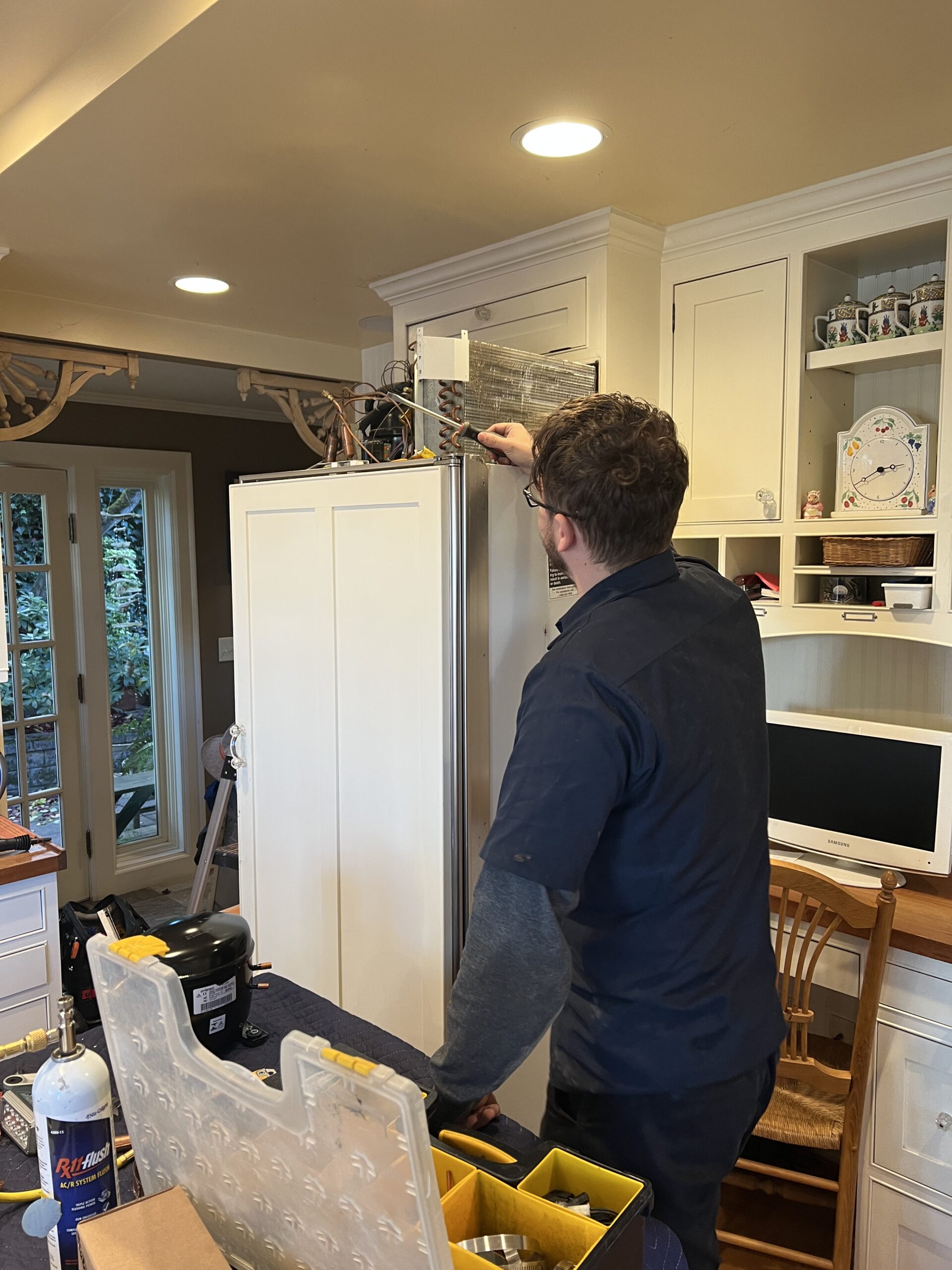
Finding water under the refrigerator can leave you with two immediate questions: where is it coming from, and can you keep using the appliance?
A puddle may come from a water connection, a drainage problem, or moisture collecting where it should not. The refrigerator might still feel cold, making it tempting to wipe up the water and leave the problem for another day.
For homeowners in Seattle and King County, identifying the source early can help protect the flooring and nearby cabinets. Here is what to observe, which checks you can make safely, and when to schedule refrigerator repair.
Start by Noting Where the Water Appears
Before cleaning the area, take a photo and note the location of the water. Is it directly in front of the refrigerator, behind it, inside the fresh-food compartment, or underneath the freezer drawer?
Also consider when it appears. Does water collect after someone uses the dispenser? Does it return overnight? Have you recently changed the water filter or moved the refrigerator?
These observations help a technician investigate the problem. Water can travel along the appliance base or flooring, so the location of a puddle does not always identify the failed part.
If water is near an outlet or electrical connection, avoid touching the plug or standing in the water while handling the appliance. Shut off the refrigerator’s water supply if you can safely reach and identify the valve.
Common Causes of Refrigerator Water Leaks
A restricted defrost drain
Many refrigerators produce water during their automatic defrost cycle. That water normally follows a drainage path to a collection pan.
If the drain becomes blocked, water may collect inside the appliance or eventually reach the floor. Whirlpool identifies a clogged defrost drain as one possible cause of refrigerator leakage.
Do not chip away ice with a knife or push a sharp object into a drain opening. The location and cleaning procedure vary by model, and some drains require professional access.
A water supply connection that leaks
Refrigerators with dispensers or automatic ice makers connect to a household water line. A damaged line or loose connection can allow water to escape even when the refrigerator continues cooling normally.
Look only at connections you can see without moving a heavy appliance. Avoid pulling a built-in refrigerator out of its cabinet or placing tension on a water line.

If you recently had kitchen work completed or moved the appliance, mention that when arranging service.
A water filter that is not seated correctly
If leaking began immediately after a filter replacement, check the owner’s manual for the correct installation procedure.
Confirm that the replacement filter matches the refrigerator model and is fully seated. Do not force it into place or keep using a damaged filter housing.
A connection that continues leaking after the correct installation needs further inspection.
Moisture entering around the door
A door that does not close fully can allow warm, humid air into the refrigerator. Check for food packages, drawer handles, or containers preventing the door from sealing.
Wipe the accessible gasket gently and look for obvious tears or gaps. Moisture around a door does not automatically mean the gasket needs replacement, but a door that consistently fails to close deserves attention.
Water Inside the Refrigerator Versus Water on the Floor
Water underneath a produce drawer suggests a different starting point from water behind the appliance.
Inside the refrigerator, first rule out a spilled container or leaking food package. If the water returns after cleaning, note whether ice is also forming near the bottom of the compartment.
Outside the appliance, check whether the moisture might be coming from a nearby dishwasher, sink cabinet, or another household source.
A technician should confirm the leak before recommending parts. Replacing a door seal will not correct a leaking water connection, and changing a filter will not resolve a blocked defrost drain.
Can You Keep Using a Leaking Refrigerator?
That depends on the source and severity of the leak.
An active water supply leak can continue damaging the floor until the supply is shut off. Water reaching electrical components requires prompt attention. A refrigerator that is also losing cooling needs a separate plan for protecting temperature-sensitive food.

Avoid assuming everything is fine because the interior light still works or the freezer remains cold.
When you contact the repair company, explain whether the appliance is cooling, whether water is still actively appearing, and whether you have shut off its water supply. Those details help the team understand the situation before the visit.
How a Refrigerator Leak Is Diagnosed
A repair visit should begin with locating the source rather than guessing from the puddle.
Depending on the symptoms and model, a technician may inspect the water connections, filter housing, drainage path, door closure, and related components.
The goal is to establish why the water is escaping and whether another issue contributed to it.
Ask what has failed, what the proposed repair includes, and whether the technician needs to return with a model-specific part. An explanation of the diagnosis makes it easier to compare repair with replacement if the refrigerator has other problems.
Preparing for Refrigerator Repair in Seattle
Have the brand and model number available if possible. You can often find the model label inside the refrigerator compartment, although its location varies.
For built-in appliances, mention whether the refrigerator has custom panels or sits tightly within cabinetry. In Seattle condos and apartments, tell the company about parking, elevator access, and any building service requirements.
Clear a reasonable path to the kitchen. There is no need to move the refrigerator yourself or remove cabinet panels before the technician arrives.
Preventing Repeat Water Problems
Check accessible water connections periodically for moisture. Replace filters according to the manufacturer’s instructions and use compatible parts.
Keep food packages from obstructing the doors, and address a door that repeatedly stays ajar.
After a repair, watch the affected area during normal use. If water reappears, document when it happens and contact the repair company rather than assuming the same part has failed again.
Schedule Refrigerator Repair in Seattle and King County
A refrigerator leak deserves a diagnosis, even when cooling seems normal. EHS Expert Appliance Repair provides refrigerator repair in Seattle and serves nearby King County communities, including Bellevue, Redmond, Kirkland, and Mercer Island. Schedule a service or call (206) 466-3323 to describe the leak.
Have an appliance issue today?
Our licensed technicians offer same-day service across Seattle and King County.