You open the washer expecting clean laundry and find a tub of water instead. A load that will not drain can leave clothes soaked, delay the next wash, and make you wonder whether the entire machine has failed. For Seattle households with a compact laundry closet or a stacked unit, even getting a good look behind the machine can be difficult.
A drainage problem does not automatically mean you need a new washer. Some causes are simple, while others need a technician to test the pump, controls, or door lock. Here is how to tell the difference without making a wet situation worse.
What to Do First When the Washer Is Full of Water
Do not keep starting new cycles hoping the water will disappear. If the machine is leaking, stop using it, unplug it if you can reach the plug safely, and shut off the water supply valves. Keep children and pets away from standing water near an electrical appliance. If the floor or outlet is wet, avoid touching the plug and have the situation handled safely.
Check the display for an error code and take a photo before resetting anything. Note whether the machine stopped during washing, rinsing, or spinning. That detail helps a repair technician narrow down the fault.
If the machine has a drain-only or spin-and-drain setting, you can try it once while staying nearby, provided there is no leak, burning smell, or unusual grinding noise. If it hums but does not empty, or the code returns, stop there.
Common Reasons a Washing Machine Will Not Drain
A blocked pump filter or trapped object
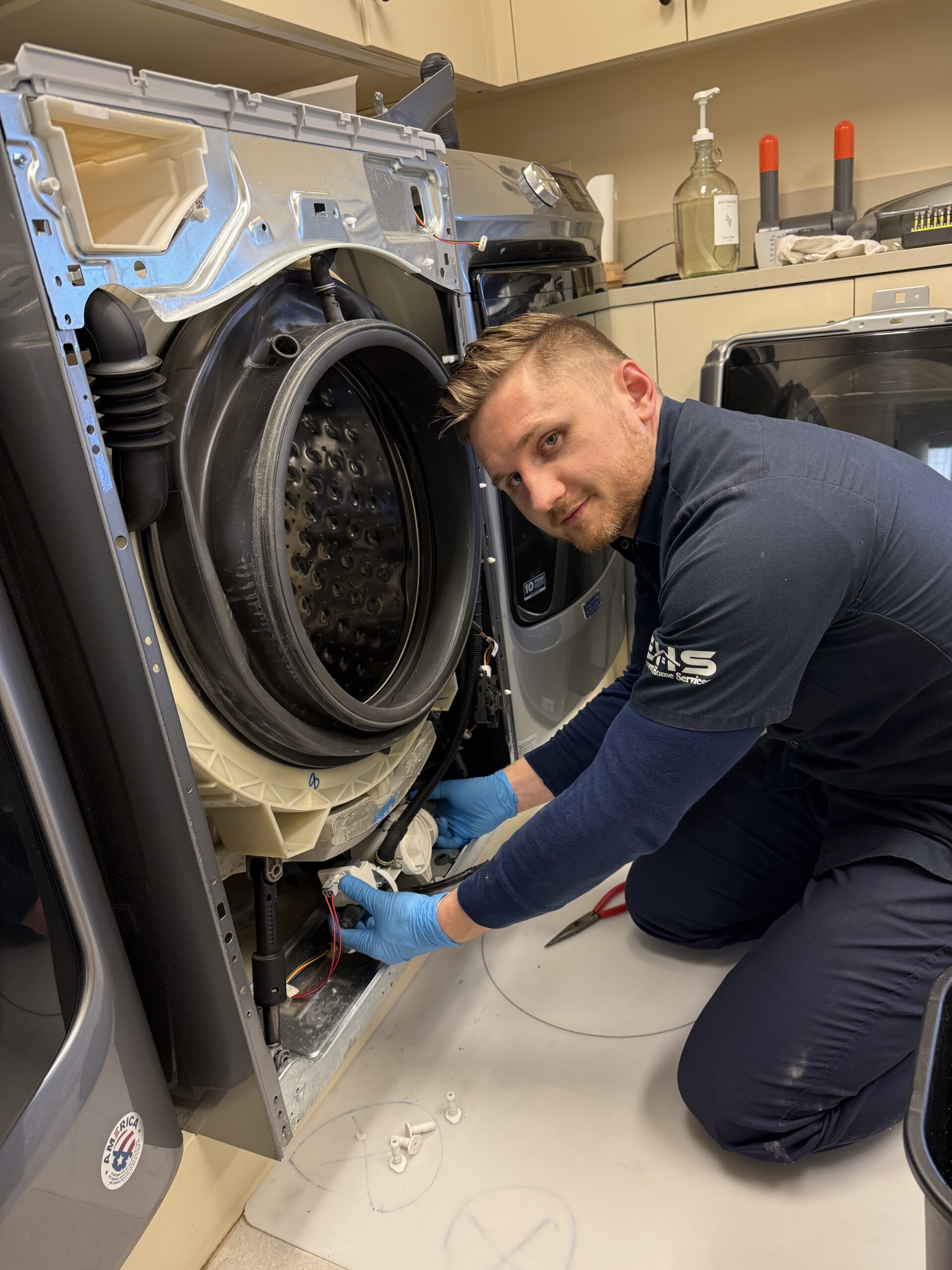
Some front-load washers have a user-accessible filter behind a small lower panel. Coins, hairpins, lint, and other small items can block the path to the pump. Follow your model’s manual before opening it: water may rush out, so use towels and a shallow tray. Not every washer has a homeowner-serviceable filter. Do not remove an unfamiliar panel or force a stuck cap.
A kinked or restricted drain hose
A hose pinched behind the washer can slow or stop water leaving the tub. Look for an obvious kink where the hose is visible. Also check whether the household drain is backing up. If water spills from the standpipe during discharge, the issue may be in the home’s drain rather than the appliance.
Seattle homes and apartments often put laundry equipment in tight spaces. Avoid pulling a stacked washer-dryer or a heavy machine out by yourself just to inspect the hose; moving it can strain connections or damage flooring.
A failed or obstructed drain pump
The pump moves water out of the machine. A humming sound without drainage may indicate an obstruction or a pump that cannot turn properly. Silence can point to a pump, wiring, or control problem. The sound alone is not a diagnosis; a technician needs to check the actual cause before replacing parts.
A lid or door-lock problem
Many washers will not advance to a spin cycle unless they detect a secure lid or door. Some models also pause drainage when a fault interrupts the cycle. If the lock indicator behaves strangely or the door never clicks into place, report that when scheduling service. Never bypass the safety switch.
A load that is badly out of balance
A single heavy blanket or several towels on one side may stop a washer before the final spin. If the machine has drained most of its water and the clothes are simply very wet, redistribute the load and try the appropriate spin setting once. A tub still full of water usually calls for more than rearranging clothes.
Is It a Drainage Problem or a Spin Problem?
The distinction matters. If there is visible water standing in the tub, focus on the drain path and pump. If the tub is empty but clothes are dripping, the washer may have skipped or slowed the spin cycle. A door-lock fault, imbalance, drive issue, or control problem can produce that result.
Listen to what happens at the end of a normal cycle. Does the machine attempt to pump water out? Does it drain but never accelerate into spin? Is there an error code? These observations are more useful than guessing which replacement part to order online.
When to Call for Washer Repair in Seattle
Schedule service when the drain setting fails, the pump makes a grinding sound, an error code comes back, water leaks onto the floor, or the washer repeatedly leaves clothes soaked. Stop using a machine that has an electrical smell, sparks, or water near an outlet.
A technician can inspect the filter and hose, test the drain pump and door lock, and check the relevant controls. This matters because the same symptom can have more than one cause. Replacing a pump will not solve a blocked household drain or a faulty door lock.
Before the visit, have the washer’s brand and model number ready if possible. Mention whether it is front-load, top-load, or stacked, and describe any access restrictions in the laundry area. For condo residents, it also helps to confirm building access and any service-hour requirements.
How to Reduce Future Drain Problems
Empty pockets before washing, use detergent according to the machine and product instructions, and avoid overloading the drum. If your model has a user-cleanable pump filter, check the manual for its maintenance schedule. Watch for a gradually slower drain or a new pump noise; addressing those changes early can help prevent a tub full of water later.
Also look at the hoses periodically for visible wear or kinks. If the home drain itself backs up, arrange plumbing help rather than repeatedly running the washer. Proper drainage depends on both the appliance and the drain it connects to.
Get Your Laundry Moving Again
A washer that will not drain may have a simple blockage or a component that needs repair. Make the safe checks you can reach, then let a technician diagnose a persistent problem. EHS Expert Appliance Repair provides washer repair in Seattle and serves Bellevue, Redmond, Kirkland, and other nearby King County communities. Schedule a repair or call (206) 466-3323 with the model and symptoms.
Have an appliance issue today?
Our licensed technicians offer same-day service across Seattle and King County.