A little movement during a washing machine’s spin cycle can be normal. Loud banging, repeated stopping, or a washer shifting across the floor deserves closer attention.
For Seattle homeowners with upstairs laundry rooms or compact condo laundry closets, the noise can be especially noticeable. It can also be difficult to tell whether the problem comes from the load, the installation, or something wearing inside the washer.
Here is how to assess the situation safely and decide when professional washer repair makes sense.
Stop a Washer That Is Moving Violently
Pause the cycle if the washer is banging hard, striking nearby cabinets, or moving out of position. Wait for the drum to stop and the door to unlock before opening it.
Do not try to hold a moving washer in place or reach behind it while it runs.
If you notice leaking, a burning smell, or a damaged connection, stop using the appliance and arrange service. A moving washer can place strain on its hoses and connections, particularly in a confined laundry area.
Record a short video from a safe distance if the noise occurs again during normal use. There is no need to recreate severe movement for the sake of documenting it.
Begin With the Laundry Load
A heavy item can collect on one side of the drum and make the load difficult to balance.
Examples include a soaked bath mat, a bulky blanket, or a few heavy towels mixed with lightweight clothing.
Follow the manual’s instructions for bulky items and load size. If the machine has safely stopped and unlocked, redistribute the items rather than repeatedly restarting the same arrangement.
LG’s vibration guidance recommends checking the load and installation before assuming the washer needs a repair. Persistent vibration after appropriate checks may require service.
Why Overloading and Very Small Loads Can Cause Trouble
A full drum is not always a balanced drum.
Packing clothing tightly can prevent items from moving as intended. At the other extreme, a single heavy item may be difficult for the machine to distribute evenly.
Use the capacity and cycle guidance for your washer rather than judging only by how much physically fits inside.
Also pay attention to the fabric type. A bulky absorbent item becomes much heavier when wet.
If the washer behaves normally with typical loads but struggles with one particular item, that pattern is useful information. It suggests a different investigation from a machine that bangs during every wash.
Check Whether the Washer Is Stable
An uneven or unstable installation can contribute to vibration.
With the machine off, look for obvious gaps beneath the feet or signs that it has moved from its original position. Follow the manufacturer’s leveling instructions if the adjustments are safely accessible.
Do not tilt a heavy washer alone or improvise with loose pieces of wood or other unstable supports.
If the washer is stacked beneath a dryer, avoid moving or adjusting the assembly without appropriate help. The stacking hardware and installation need to remain secure.
A level appliance and a suitably supported floor both matter.
Did the Problem Begin After Installation or Moving?
A washer that shakes from its first use needs a different starting point from one that becomes noisy after years of normal operation.
On applicable front-load models, shipping hardware must be removed during installation according to the manufacturer’s instructions. Placement, leveling, and connections should also be checked.
If the washer recently changed locations, tell the installer or repair company when the symptoms started.
Do not assume every newly installed washer has a mechanical defect. Equally, do not accept severe vibration as normal without having the setup evaluated.
When Internal Wear May Be Involved
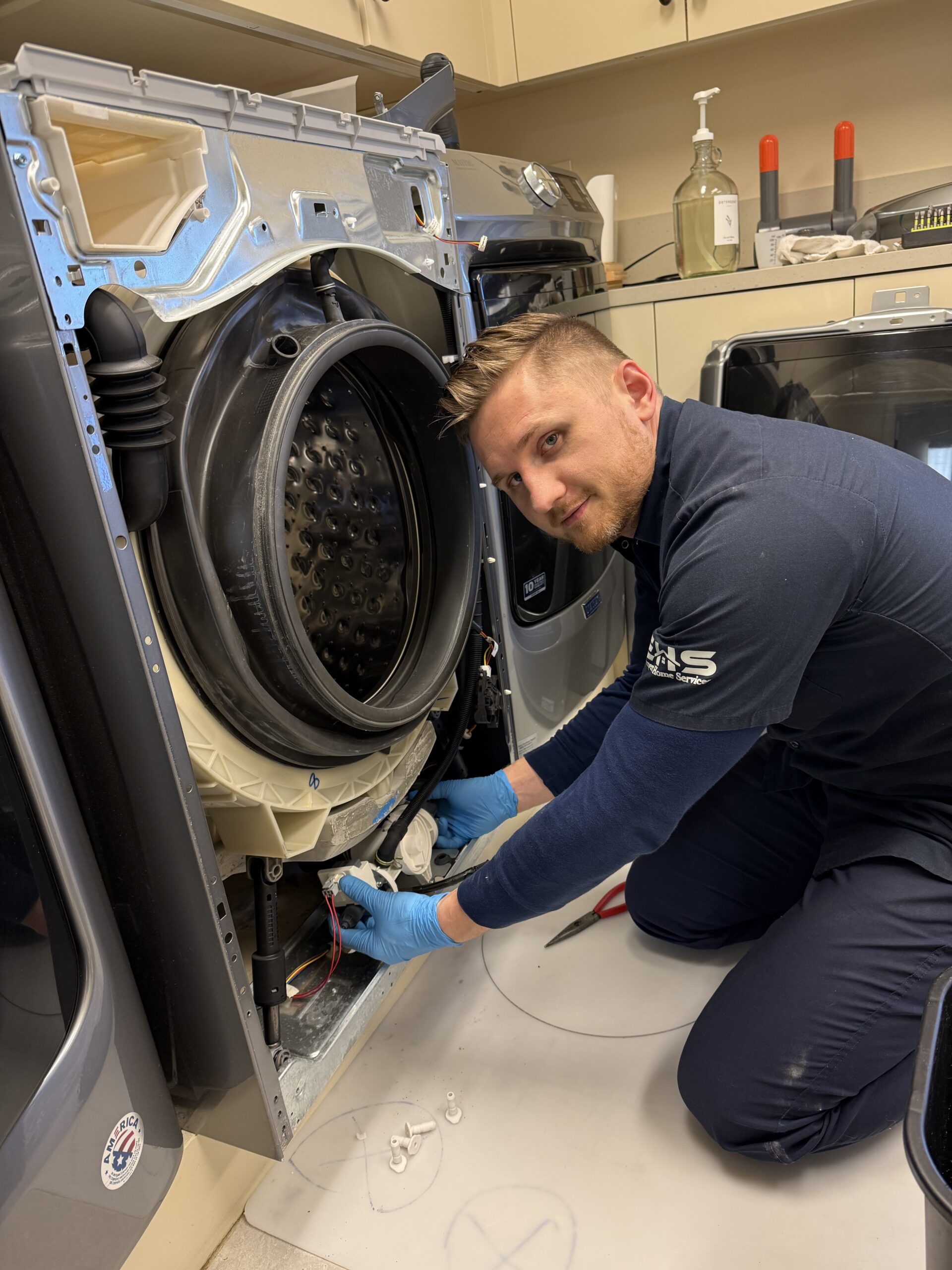
If the washer shakes across different appropriate loads and the installation checks out, internal components may need inspection.
Depending on the design, suspension parts, shock absorbers, springs, bearings, or other components can affect how the drum behaves.
A technician should identify the actual issue before recommending a repair. A banging sound alone does not establish which part has failed.
Other symptoms can help, including a new grinding noise, a drum that appears unusually off-center, repeated balance errors, or the machine consistently failing to reach its normal spin speed.
Why Continuing to Run It Is a Poor Test
Repeatedly operating a severely shaking washer does not reliably tell you whether the issue will settle down.
It may instead make the symptoms harder to manage or place additional stress on the installation.
If one careful load adjustment resolves the problem and the next normal load runs smoothly, monitor the machine. If the banging continues, arrange an inspection.
Avoid changing several things at once, such as load size, floor supports, and internal parts. A clear history helps the technician distinguish the original problem from changes made afterward.
What a Washer Repair Visit Should Establish
The technician should ask when the shaking occurs and whether it affects every load.
They may check the machine’s stability, load behavior, installation, drum movement, and relevant components. The approach should fit the washer’s design rather than use the same assumptions for every model.
Ask what is causing the movement and whether the recommended work addresses the installation, an internal fault, or both.
If the floor or surrounding structure contributes to the vibration, additional work outside the appliance may be needed. Knowing that distinction helps avoid paying for parts that will not solve the problem.
Preparing for Washer Service in King County
Have the brand, model number, and any error code ready.
Mention whether the washer is front-load, top-load, or stacked. Describe the noise in practical terms: banging, rattling, grinding, or the appliance moving out of position.
For Seattle apartments and condos, explain any elevator, parking, or building-access requirements.
Clear laundry and stored items from the immediate area, but leave heavy appliance movement to the technician. If you recorded a video during normal operation, share it at the visit.
Get Help With a Shaking Washing Machine
Persistent shaking deserves more than repeated load adjustments. EHS Expert Appliance Repair offers washer repair in Seattle and serves nearby King County communities, including Bellevue, Redmond, Kirkland, and Kent. Schedule a service or call (206) 466-3323 to explain when the shaking occurs.
Have an appliance issue today?
Our licensed technicians offer same-day service across Seattle and King County.